Italy at the table: a mosaic of diversity as a model for the world
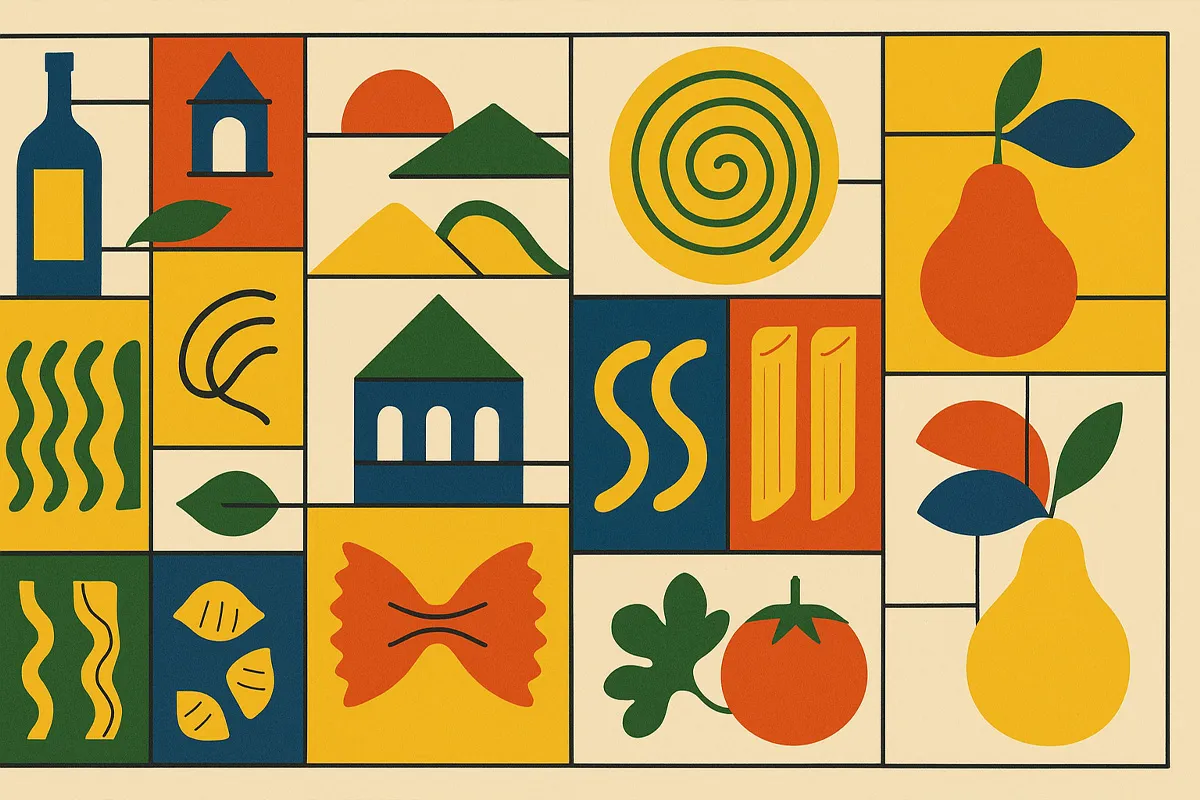
To speak of "Italian cuisine" means to evoke not a centrally defined gastronomic monolith, but a kaleidoscope of traditions, flavors, and techniques that find their essence not in uniformity, but in extraordinary local variety. Contrary to the widespread perception abroad — and sometimes even domestically — the culinary identity of the peninsula has not developed according to a unitary and hierarchical model, but through the flowering of territorial expressions deeply rooted in the life of cities and their surroundings. The phenomenon of Italy at the table represents a delicate balance between local belonging and cultural exchanges, a rich panorama that resists any attempt at simplification.
The archetype of this complexity can be found in pasta, an emblematic element but far from monolithic. Although the Romans already knew some primitive forms, such as the large "lasagna", it was the Arab influence in the Middle Ages that introduced to Sicily and the Iberian Peninsula not only revolutionary new crops - from citrus fruits to sugar, from aubergines to spinach - but also the culture of stretched curds and, crucially, the drying technique. This last innovation radically transformed the status of pasta, from a domestic and ephemeral preparation to an industrial product capable of withstanding long transports and prolonged conservation, marking the beginning of its commercial success.
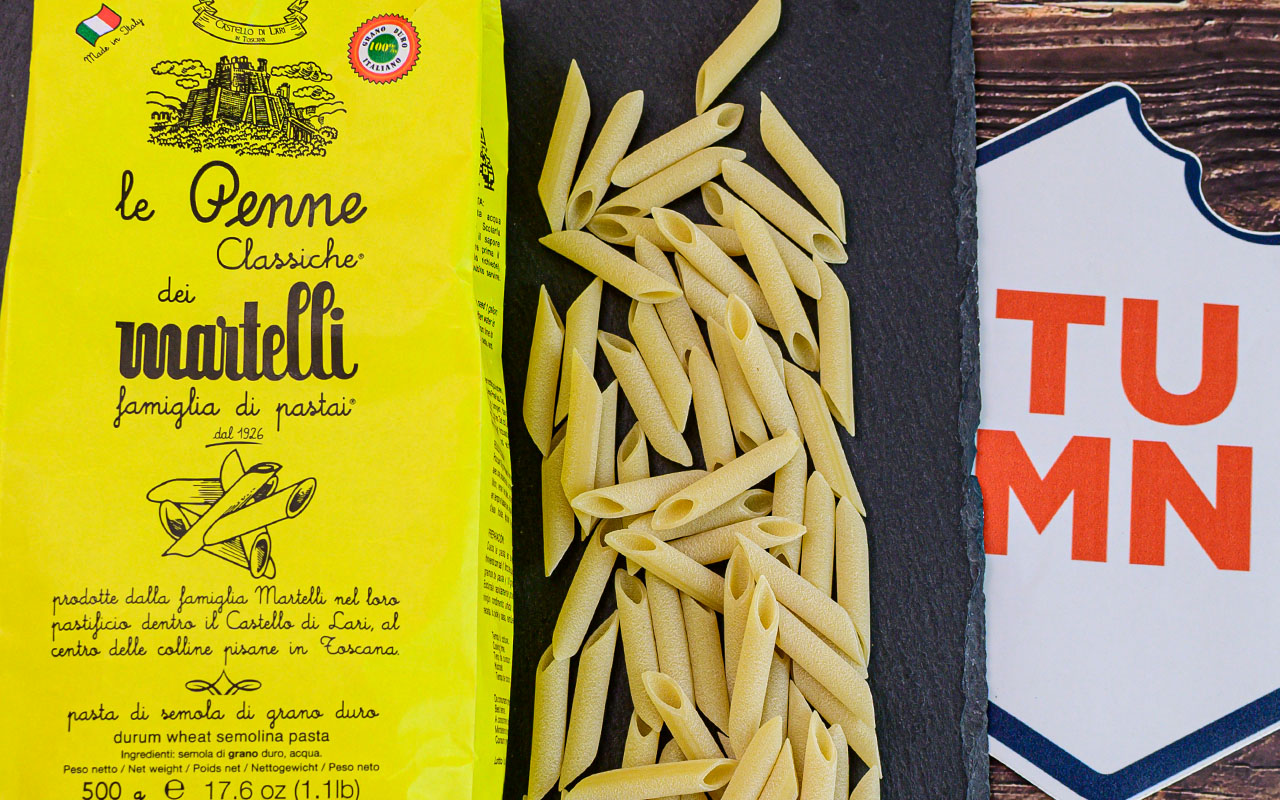
From this fruitful grafting of Mediterranean tradition and oriental contributions, an unparalleled typological variety sprouted in medieval Italy: long and short pasta, smooth and ridged, perforated and filled like ravioli and tortelli, each an expression of specific local conditions - from the availability of raw materials to artisanal skills, from regional tastes to conservation needs. Pasta itself thus becomes a perfect metaphor for Italian cuisine: a basic principle (flour and water, sometimes enriched with eggs) that is expressed in infinite local variations, each with its own specific identity and method of use, a concrete incarnation of the principle of unity in diversity.
In this process, cities have not been mere centers of passive consumption, but active protagonists of cultural development. The entire history of Italy at the table is marked by these vital nodes in a complex network of exchanges - economic, food, but above all cultural. Bologna, with its ancient university that attracted students and teachers from all over Europe, was a crossroads of cultures where taverns could thrive, offering dishes suited to different palates, where one could "eat German" or "French style". This ability to "network" skills and traditions, to gather the cultures of the surrounding area to elaborate and exchange them with other cities and markets, is the secret of the gastronomic success of places like Bologna and, by extension, of the entire Italian culinary tradition.
The market, a place of exchange and contamination, rather than the closed and self-referential territory, emerges as the authentic engine of this gastronomic evolution. Not an identity that is strengthened in isolation, but that is enriched in openness to others, in the constant dialogue between the local dimension and broader horizons.
Particularly significant is the distinctive feature of Italian gastronomic literature, from the first medieval recipe books such as the "Liber De coquina" to later compilations such as those of Bartolomeo Scappi in the 16th century or Pellegrino Artusi in the 19th century: a profound respect for territorial diversity. Unlike other national traditions, no Italian author has ever claimed to codify a "true" national cuisine; rather, culinary works have been configured as anthologies of recipes from different cities and regions, compared but without establishing hierarchies of values between them.
Scappi and Artusi, although addressing profoundly different audiences - the court aristocracy the first, the post-unification national bourgeoisie the second - adopted the same methodological approach: collecting and proposing a vast repertoire of local traditions, recognizing in this plurality not a limit to be overcome, but the true wealth of the Italian gastronomic heritage.
A further peculiarity is represented by the significant circularity between popular culture and elite culture in the culinary field. The scenario of Italia a tavola contradicts the ideologies that theorized an unbridgeable distance between aristocratic and peasant cuisine; everyday practices reveal how the gastronomy of the wealthy classes has systematically drawn from the heritage of the less well-off classes, "ennobling" simple preparations through the addition of fine ingredients or refined combinations. The attention to vegetables, extraordinarily present in Italian recipe books since the Middle Ages - in contrast to the emphasis on meat dominant in European aristocratic kitchens - represents one of the most significant contributions of popular cuisine to elite gastronomy and a distinctive feature of Italian culinary identity.
Innovations such as medieval stuffed "pies", ingenious pastry cases for containing, cooking and transporting different foods, or the birth of ice cream and sorbet in Naples, linked to the use of Arab techniques for combining sugar, snow and fruit, testify to the constant creative vitality of this tradition open to external contributions.
In the current globalized scenario, this intrinsic diversity, which for centuries could have appeared as an element of weakness compared to more centralized and easily exportable national models such as the French one, reveals itself as an extraordinary strength. The thousand-year history of Italy at the table, with its inestimable heritage of different but interconnected traditions, is today in a privileged position in a world market that tends to standardize but which, by paradoxical reaction, searches with increasing intensity for authenticity and local specificity.
It is a cuisine that has been built through a collective and widespread process, drawing on the knowledge and products of cities and countryside in a continuous dialogue, and in which Italians recognize their own history and their most authentic identity. A model that demonstrates how the strength of a tradition does not reside in its immutability, but in the ability to evolve while maintaining a recognizable core; not in the imposition of a rigid canon, but in the acceptance of differences as wealth; not in isolation, but in the constant openness to the new and the different. A lesson that, from the table, could extend to many other areas of human coexistence.




 Italiano
  Espanol
  German
  French