What are mushrooms good for: a journey into the ancestral memory of the undergrowth
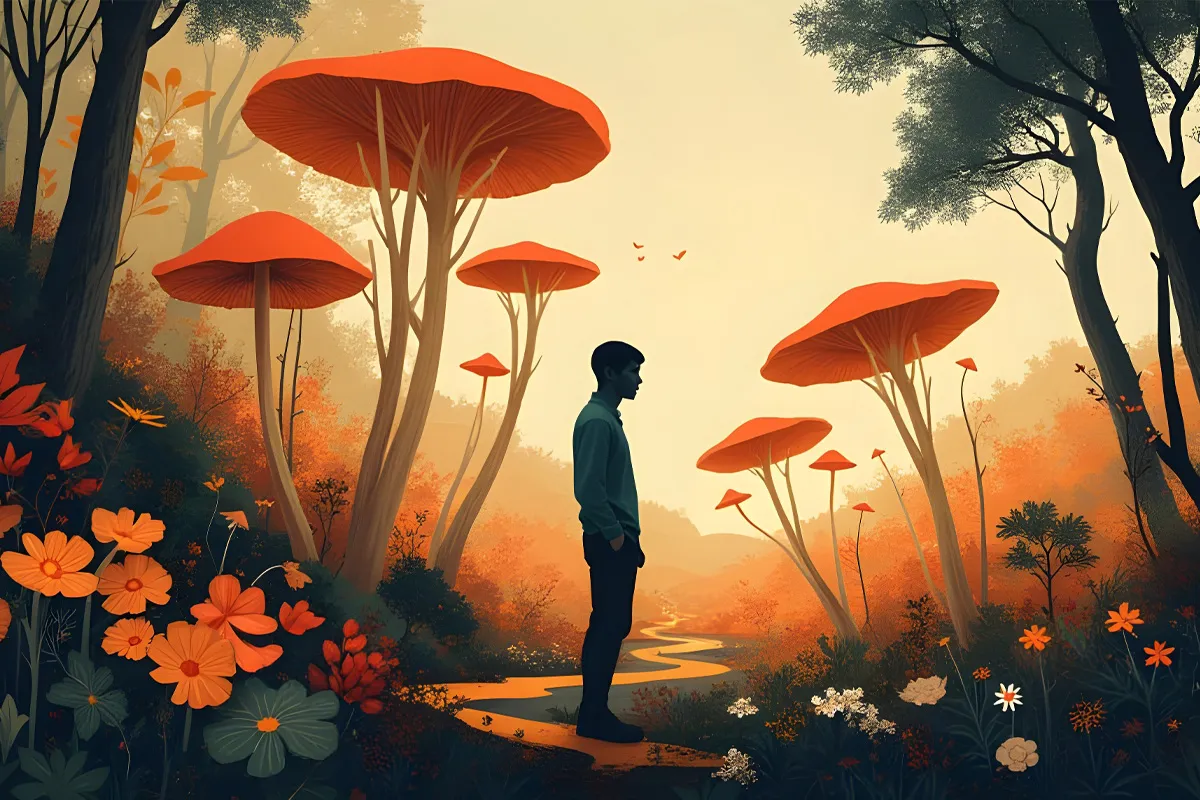
In the invisible webs that connect the earth to the air, in the shadows where humidity persists like a secret, there are creatures that are neither plants nor animals. Silent intermediaries between worlds, witnesses of a primordial era that still resists. We call them mushrooms, but they are much more than a name, a classification. What are mushrooms good for? This question opens a portal to ancient knowledge, to embodied memories of when the boundary between human and forest was only a temporary illusion. There is something sacred in the way an old woodland expert introduces a young man to the world of mushrooms. One autumn morning, when the air becomes thick, almost liquid, and the light filters through the leaves like a whispered promise. The gaze is guided downwards, towards what the ground hides and reveals at the same time. Knobby hands, forged by years of patient observation, delicately move the fallen leaves, revealing small, turgid, pale bodies that emerge like sudden thoughts from the dark ground. "These," whispers the voice of experience, "are older than any story told by men." The sentence resonates as the beginning of an understanding that accompanies for decades. What are mushrooms good for? The question seems almost reductive, like asking what purpose breathing or a heartbeat serve. It is a question that invites a journey through the body, the spirit, and the collective memory of humanity.
What Mushrooms Do for the Immune System: Underground Dances of Protection
Mushrooms converse with the human immune system in a forgotten language that the body, however, remembers. To understand what mushrooms do well in the immune context, one must explore the presence of compounds called beta-glucans - a word that on paper seems clinical, cold, but in biological reality represents an ancient bridge between the kingdom of fungi and that of humans.
Cordyceps , for example, grows in rugged terrain, high in the Himalayas, where oxygen is rarefied and life endures through sheer obstinacy. Chinese medicine has venerated it for millennia, long before Western science confirmed its immunostimulatory properties. Isn’t this a perfect example of how intuitive wisdom often precedes analytical understanding? When a weakened body encounters the essence of Cordyceps, something akin to an awakening occurs: the immune cells—macrophages, natural killer cells, lymphocytes—begin a more vigorous dance, as if suddenly remembering their primordial purpose. It is a cellular dialogue that transcends words, a communication that belongs to an era when language had yet to be invented.
In the labyrinths of the nervous system
In the exploratory journey of the fungal virtues for the nervous system, the Lion's Mane , or Hericium erinaceus, stands out with silent elegance – a woodland creature that seems to have lost its way from the depths of the sea. White in its coat, it is adorned with hanging filaments similar to a waterfall crystallized by time. This external appearance, so delicate and surprising, is nothing but a veiled presage of the gifts it holds in the hidden folds of its essence, treasures capable of dialoguing with the most subtle architectures of our nervous system. In contemporary societies, where information invades every space of consciousness and attention is fragmented like light on broken glass, the human brain silently yearns for a return to clarity. The Lion's Mane contains compounds - erinacine and erinacolactone - that seem to respond to this silent call.
These active ingredients cross the blood-brain barrier - that rigorous border between blood and brain - and stimulate the production of nerve growth factor (NGF). It is as if they were carrying a message from the forest to the synapses, whispering the possibility of regeneration and plasticity in an organ that science has long considered static and immutable. Those who have experienced the slow but inexorable improvement in memory, concentration, mental clarity after a period of taking Lion's Mane describe a return home, to a more whole, more present version of themselves. It is not just a question of neurons and neurotransmitters - it is a rediscovered dialogue with parts of themselves that seemed to have fallen asleep in the chaos of modernity.
Reishi: Between Sleep and Immortality
Ganoderma lucidum , known as Reishi or Lingzhi , grows on the trunks of dead or dying trees, almost as if to symbolize the continuous transformation between end and rebirth. Its shiny, reddish surface resembles a seal, a talisman. In Taoism it is revered as the "mushroom of immortality" - not because it grants eternal life in the literal sense, but because it allows access to a quality of life that transcends mere survival. What is Reishi good for? The list is long, almost poetic: it calms the restless heart, calms the frenetic mind, invites deep sleep, the kind in which dreams become restorers of the soul. The triterpenes and polysaccharides contained in Reishi act as mediators between wakefulness and sleep, between activation and relaxation. In an age when insomnia has become endemic, when artificial lights and screens have scrambled the circadian rhythms that have guided human sleep for millennia, Reishi emerges as an ambassador of the night, a reminder of what it was like to fall asleep in tune with the darkness of the world.
Those who take Reishi regularly often describe a subtle but profound change: it's not just that sleep becomes easier, deeper, more restorative. It's that the relationship itself with rest changes. Sleep is no longer an absence, a parenthesis between moments of productivity, but becomes a necessary immersion in an ocean of regeneration.
What are mushrooms good for in metabolic dances: digestion and assimilation
Mushrooms maintain a special relationship with human metabolism. They are, in a sense, biological mediators between what enters the body and what the body does with it.
Chaga , the charred-looking mushroom that grows on birch trees in northern climates, is a master of this mediation. It contains enzymes that aid digestion, freeing up nutrients that would otherwise remain trapped in unassimilable forms. It’s as if it were lending the human gut some of its innate ability to break down and transform organic matter. But there’s more. Mushrooms like Pioppino don’t just aid digestion: they are active architects of the gut microbiota, the complex ecosystem that inhabits the intestine and that modern science has recognized as a “second brain,” a center of biological intelligence that influences not only digestion, but also mood, mental health, even decision-making. The polysaccharides in mushrooms act as valuable prebiotics, selectively feeding the beneficial bacteria in the gut, creating the conditions for a diverse and resilient bacterial flora. It’s a form of organic indoor gardening, with mushrooms serving as seeds for a thriving gut ecosystem.
The Heart and Blood: Circulation and Protection
Mushrooms have a special relationship with the human circulatory system. Maitake , with its structure reminiscent of a petrified butterfly dance, contains compounds that interact with blood cholesterol, inviting it to maintain a balance that promotes blood fluidity and arterial health. Here we see a symbolic correspondence: the mycelium of mushrooms, that underground network that connects vast wooded areas in a communicating system, seems to reflect the human circulatory system. Both are networks of exchange, nourishment, communication. It is not surprising that mushrooms "understand" so intimately how to support the health of blood vessels. Blood pressure, that essential rhythm that marks the life of every cell, finds discreet but powerful allies in mushrooms. Reishi , once again, master of many knowledge, modulates the production of nitric oxide in the arterial walls, promoting a gentle vasodilation that allows blood to flow without excessive effort on the heart.
Subtle Balances: Mushrooms as Hormone Modulators
In the human body, hormones are messengers that travel in the blood carrying instructions from one part of the organism to another. They are biological words that orchestrate complex functions: from reproduction to energy metabolism, from the sleep-wake cycle to the response to stress. Mushrooms, especially medicinal ones such as Cordyceps and Reishi , contain compounds that can modulate these hormonal messages. They do not replace or suppress them: they harmonize them, bring them back to a balance that contemporary life has often upset. For women who go through the different seasons of femininity, from irregular cycles to perimenopause, up to menopause itself, mushrooms offer support that does not have the aggressiveness of hormone replacement therapy, but the delicacy of a natural accompaniment. The adaptogens present in mushrooms help the body to find its rhythms again, to remember its innate wisdom. For men , especially as they age, mushrooms like Cordyceps support natural testosterone production and vitality, without the risks associated with synthetic supplements.
The cancer alliance: potential and promise
The word "cancer" evokes fear, but also a strange kind of reverence: it is a biological process that, in its deviation from normality, reveals much about the nature of cellular life itself. Mushrooms have a complex and fascinating relationship with cancer. Many medicinal mushrooms—from Coriolus versicolor to Chaga , from Reishi to Agaricus blazei —contain compounds that have been shown, in vitro and in some clinical cases, to influence the behavior of cancer cells. Beta-glucans, again, activate natural killer cells, those guardians of the immune system that specialize in recognizing and eliminating cells that are straying toward cancer. Other mushroom compounds inhibit angiogenesis, the process by which tumors build their own network of blood vessels to feed themselves. Still others appear to be able to induce apoptosis, the process of "programmed cellular suicide" that normally eliminates damaged cells before they can proliferate abnormally. It is important to note that research in this field is still evolving, and mushrooms are not a panacea. But the promise is there, rooted in millennia of traditional medicine and now being explored with the tools of modern science.
Silent Dialogue: What Mushrooms Do for the Psyche
There is a dimension of the human experience that transcends biochemistry, yet is profoundly influenced by it: the psyche, the conscience, that interior territory that is both the most intimate and the most universal. Some mushrooms - not those commonly consumed at the table, but species such as Psilocybe - contain psychoactive compounds that, in appropriate and respectful contexts, can facilitate experiences of deep introspection and connection. Scientific research in this field, after decades of taboo, is reviving, exploring the therapeutic potential of psychoactive mushrooms for conditions such as treatment-resistant depression, end-of-life anxiety in terminally ill patients, and addiction. But non-psychoactive mushrooms also engage in a dialogue with the human psyche. Lion's Mane, as mentioned, improves cognition and mental clarity. Reishi reduces anxiety and promotes restful sleep, indirectly influencing mood and emotional resilience. Cordyceps increases energy and vitality, counteracting the fatigue that often accompanies or precedes depression.
The choice and the preparation: a ritual of connection
In today’s fast-paced world, the simple act of selecting, preparing, and consuming mushrooms can become a ritual of connection—with the earth, with ancient wisdom, with a slower, more conscious dimension of time. Whether you’re picking fresh mushrooms, picked in the woods or purchased from trusted producers, or extracts and supplements derived from medicinal mushrooms, the mindful approach is part of the benefit. In traditional Chinese and Japanese medicine, the way a remedy is prepared and taken is considered integral to its effectiveness. For fresh mushrooms, cooking is almost always necessary—not only for safety and digestibility, but also to release many of the bioactive compounds that would otherwise remain unavailable. It’s as if the heat unlocks the secrets hidden in the mushroom’s flesh, an alchemical process that transforms a simple dish into medicine.
For extracts and supplements, quality is key. The best ones are made using both the mushroom fruiting body (the visible part) and the mycelium (the underground network), and often include an extraction process that uses both hot water and alcohol to capture the full range of beneficial compounds.
An epilogue that is a beginning: the integrated perspective on the benefits of mushrooms
This journey through the benefits of mushrooms is just a beginning, an introduction to a world of possibilities that extends both into the past and the future of human experience.
Mushrooms have been companions of humanity since the earliest times, present in the traditional pharmacopoeias of every culture, from Chinese to Aztec, from Siberian to African. Today, as modern science rediscovers and validates these ancestral wisdoms, mushrooms emerge as valuable allies in an era characterized by unprecedented challenges to human health.
These natural elements help us remember that we are part of a larger ecosystem, that health is not the absence of disease but dynamic harmony, that the boundary between food and medicine is more porous than modern Western culture has wanted to believe. Mushrooms thus invite us to a medicine of the terroir , rooted in the specific places where we live, in the woods that surround us, in the seasonal cycles that still, despite everything, govern life on Earth. They remind us that, perhaps, true health is not only found in pharmaceutical laboratories or operating rooms, but also in the humid undergrowth, in knowledge passed down from generation to generation, in the slow rhythm of the breathing earth. Ultimately, understanding what mushrooms are good for means welcoming their greatest gift: not only their therapeutic benefits, but their silent invitation to rethink our relationship with nature, with the body, with health itself. An invitation that, today more than ever, would be worth welcoming.
Scientific sources
The Nutritional and Health Benefits of Mushrooms > [ link ]
Bioactive Components of Mushrooms: Processing Effects and Health Benefits [ link ]
A review of the therapeutic and biological effects of edible and wild mushrooms [ link ]
Bioactivity and Health Benefits of Mushrooms Mainly from China [ link ]
A critical review on the health benefits of edible mushrooms through gut microbiota [ link ]
Mushrooms as healthy foods for future generations [ link ]
The beneficial role of edible mushrooms in human health [ link ]
Edible Mushrooms: A Comprehensive Review on Bioactive Compounds with Health Benefits and Processing Aspects [ link ]
Edible mushrooms for sustainable and healthy human nutrition: nutritional and medicinal attributes [ link ]
Medicinal Mushrooms: Bioactive Compounds, Use and Clinical Trials [ link ]


 Italiano
  Espanol
  German
  French