Even before the so-called pandemic, many people suffered from eating disorders and, although it is often thought that these problems mostly concern the very young, the investigation of reality testifies to an alarming fact: 60% of the population suffers from disorders related to emotional nutrition .
For example, think that the most common eating disorder in the United States is uncontrolled eating disorder. An estimated 3.5% of women, 2% of men and 30-40% of those seeking weight loss treatments are clinically diagnosed as "uncontrolled eating disorder" (1).
Whether it's stress, anxiety, sadness, boredom or pain , it is understandable why we turn to food for reasons of emotional comfort. All of this is due to the fact that food offers a rather large, albeit very temporary, solution to our suffering. Eating is beautiful. Unleash a cascade of pleasant sensations that make it easier to forget unpleasant emotional experiences.
Think of it this way: when it is stress that makes you eat, you are using food to solve a problem. But it is quite clear that you cannot solve this problem with food.
What's more: most people who experience emotional feeding immediately feel trapped and guilty, which leads them to repeat this behavior.
Arrived here, whether you are personally interested in this topic or are following it on behalf of a loved one, here we will try to suggest three useful strategies to deal with the problem of emotional nutrition. Not only that, we will try to explain how you can get results back home, keeping them over time, basically solving the problem definitively.
A strategy divided into three useful techniques for dealing with emotional nutrition

Each of the three techniques we are going to describe below deals with different aspects .
The former develops a better awareness of what causes excessive food consumption. The second describes useful tactics precisely in the moments in which the mental mechanisms, so-called "activators", which lead to emotional food are activated. The third instead will help you understand that food does not define you as a person . As an overall result, we have therefore collected a variety of methods to help you get back in order, right from the moment you understand that you are not exactly in place and that you have crossed the threshold of disorder.
Our brains like patterns
Many of our thoughts, emotions and actions are activated on autopilot . They are parts of sequences that our brain has known well and that has been practicing for years. To be enabled, these sequences only need some activators to occur. In the presence of an activator, therefore, your brain imposes a certain behavior, such as eating under stress, without requiring any conscious decision-making on your part. The cravings for certain types of food work exactly like this.
In this sense, the physical sensation of hunger is the most obvious trigger. This feeling that makes your stomach growl is positive and you can rely on it to understand that it's time to eat.
Food for stress usually occurs after other types of triggering factors, such as certain sights, smells, people and emotions . For example, you may find yourself emptying a box of biscuits (but also half) every Saturday afternoon. Try asking yourself why, focusing on the possible reasons for these automatic, compulsive actions. This is because the process is so automatic that you normally have no idea what is triggering it.
But if you really started paying some attention to this phenomenon, you could come to a discovery: on Saturday afternoon for ex. talk to your mom on the phone!
It eats!

Here we are with a crazy idea: eat, and eat a lot. At first, this tactic will seem counterintuitive to you. Even uncomfortable. You regard it as a learning experience , a necessary step in the process, bearing in mind that there are also worse ways of learning.
The next time you have the impulse towards emotional feeding, learn to experiment. Write down your behavior to document what happens and how you feel before, during and after.
An area not subject to trial
This process will help you identify the triggers, but it will also begin to remove, or at least lessen, any sense of guilt or shame you feel when you eat excessively. Often, if you are "allowed" to overeat, the principle of transgression will also fail. Focus on this aspect: when an action is no longer forbidden to you, the intense desire for an entire box of biscuits sometimes turns into a more manageable desire. For example, you could eat only one or two. So try to observe your experience in the most neutral way possible. If you're having trouble, imagine you're a scientist collecting data about someone else.
Take these notes for a month . Next, take a look at your annotations. What are you reading? Are there any particular patterns or moments that affect you? You may notice that you head to the snack cabinet immediately after exiting a stressful two-hour conference call. And you realize that you have been doing it almost every day, for several weeks ...
You will probably need to experiment this more than once for the activators to become noticeable. All of this is perfectly normal and ... it's fine! In this case, do your best not to be obsessed with the decision to eat or not to eat. Instead try to focus on understanding, on the awareness of your behavior, recording all your notes (you can also use vocal notes , have you thought about it?).
Decide what to do
Once you are aware of the activator (s) , you can go on the counterattack. If it's something you can avoid, fantastic! If the triggering cause isn't something you can change or avoid, sometimes just being aware that you're living a cause can help. And this usually determines the need for phase two.

Create an alternate feeding route
Choose an action to perform every time the activator that leads you to eat compulsively occurs . Ideally, there are multiple possible actions, such as a "menu" of choices for yourself. These actions will break the activator / behavior cycle. But there is more.
"Food is an easy way to fill some of these gaps that we feel. That's why it's important to have clear ideas about things that can feed us in different ways." Jen Cooper, author of the Precision Nutrition Coaching program, wrote it
A few examples? A trip to the fresh air, social interaction, walk or movement! If you prefer some more concrete examples of actions to take before eating: take three deep breaths, drink a glass of water, mentally check the signs of physical hunger, play with your pet for five minutes, listen to your favorite song or a few minutes of a podcast, take a short walk, spend a few minutes in household chores (like folding clothes or organizing your desk).
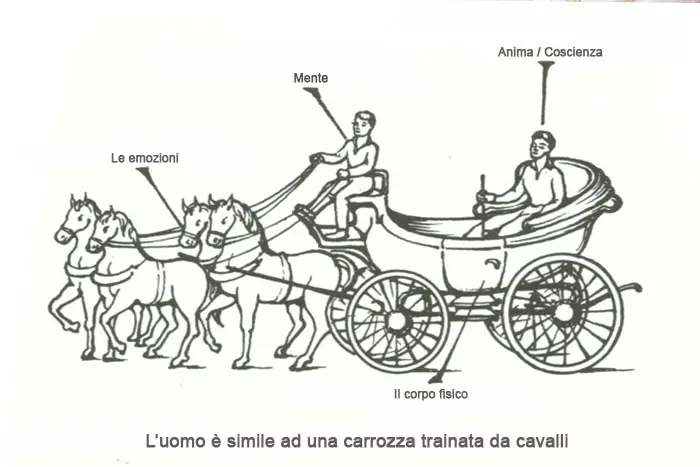
The most effective nutrition paths must always include actions in line with your goals and values . Only in this way will they be more likely to offer the same feeling of relief that you hoped, consciously or not, to get from food.
For example, if you deeply appreciate your close friendships, calling or texting a friend may be one of the options on your path.
Having said that you could object: "Of course, all of this sounds good ... but in reality I know myself and I know I won't." So let's try to give you some ideas that could help you.
- Make it as easy as possible for yourself. Make sure your food options are viable and reasonable. At most, it should take 15 minutes to complete. For example, a quick write session might be one of them. Ideally, you want to have one or two options that will take a minute or less. How to write three emotions that you feel in topical moments or hug your partner . We also recommend that you keep all the materials you need close at hand. If you want to drink a glass of water before eating, always keep it handy. Considering the need to write something before putting your hands in the pantry, keep a notepad and pen on the kitchen counter. Or considering the possibility of eating a portion of vegetables before making any other type of snack, keep the washing and cutting options always usable in a few steps;
- Put your power path somewhere visible. Stick it on your fridge, cupboard or anywhere else where you could consult it before eating. It will be less likely to ignore it, always having it at your disposal. And if you ignore it from time to time, it's not a big deal. The key is to improve a little over time, not to be perfect. Don't consume your energies with too important expectations. Proceed by step. So if you use your nutrition path once every three times when you eat stressed out, know that you are making progress. For the record, it is often enough to take an action on the path to interrupt the cycle. You don't always have to make your way through the whole list. But it's good to have multiple stocks to choose from for variety. What if you try a few actions and still want to eat? It will happen. But remember: you have already done some really good things for yourself. So go ahead and eat your snack. Treat it like a meal. Divide the amount you want to eat in a bowl or on a plate, sit at a table without distractions and enjoy it slowly and consciously;
- Keep track of how often you use your feeding path. Also, record what happens when you do it (on the phone or on a post-it). Let's say that in the course of a day, you have the urge to snack four times. Twice, use one more of your techniques and avoid eating. Once, use your technique and end up eating something slowly and consciously. Another time, you skip the menu entirely and end up eating too much. At the end of the day, you can do a retrospective and see what actions have helped you stop the stress cycle.
Start proactively and regularly doing these actions throughout the day. Your progress will be inevitable.
Take a self-compassionate (change-oriented) approach
None of the circumstances generated by the pandemic are normal. It is logical that you are not eating (or exercising, or working or living) as you normally do. But feeling bad because out of the routine can make stress worse. It is also important for one's self-esteem to try to deal with things in the most literary sense of the term: to read between the lines, within the facts and possible scenarios. What could be better than an exceptional event if not the possibility of concentrating on oneself and using all the possible levers useful for self-improvement ? There are many ways and this is the perfect time to start practicing self-compassion, which means first of all showing yourself interested in yourself , generous, honest and kind towards your person.
Never underestimate this aspect and, if something opposes this possibility, know that this is a problem, not you . Many people who eat for stress do not have a proactive attitude, but rather think about talking negatively about themselves , thinking about a possible future, and in the meantime they crowd their heads with negativity, before, during and after the compulsive acts of emotional feeding.
Some of these may seem familiar:
“Now I take my snack, as always. Why can't I ever learn? "
“I am really an idiot when I do this. And I did it again! "
"Here, I just finished the ice cream again, congratulations to the donkey that I am"
In all this it is essential to keep in mind the following, we report it in full
Effects of negative inner dialogue
In addition to low self-esteem, there are physical effects related to self-criticism. Many personal development teachers argue that self-critical thoughts are not limited to the mind, but permeate every cell in the body, causing the chaos of our physiology over time.
They are right. Studies show that negative psychological events increase cortisol levels in otherwise healthy people. High cortisol levels are associated with weight gain, low immune function, high blood glucose levels, high blood pressure, severe fatigue and muscle weakness. Anxiety, irritability and depression also occur in people with high cortisol levels.
Is it serious. Living with daily negative speeches forces the body to live in a fight or flight mode, which inhibits almost any natural function. (4)
Self-compassion is a tool that can help break this cycle. And no, we are not trying to induce you to enter some municipality where you spend time holding hands and being kind to yourself. There is research supporting this approach. What do these studies suggest? That practicing self-compassion can help reduce the "who cares" feeling that occurs just before a person starts eating emotionally (2 and 3). So yes, you can work on your problem just by being kind to yourself.
In all this it is obviously important to remember that self-compassion does not mean giving yourself a free pass to eat anything you want.
What is self-compassion in substance?

There are three main elements to focus on. In theoretical form
- Awareness : when you are fully aware of what you are doing, thinking, feeling and living, but you are not judging yourself for it;
- Sense of communion : to recognize that you are not alone, that at some point everyone faces what you are dealing with;
- Self-kindness : being generous and dignified with yourself;
When you are about to eat compulsively, try to break the cycle with a little self-pity and kindness.
In practical form:
- Awareness : “I am so anxious to be locked up in the house right now. And those chips are really calling me ... "
- Sense of communion : “Okay. Many people have a hard time saying "no" to potato chips. "
- Self-kindness : “Take a deep breath. Whether or not I choose to eat right now, it will be fine. "
It also works during and after the act of eating under stress. Below
- Awareness : “Right now I feel quite guilty. This sucks. "
- Sense of communion : "Many people probably feel this way now that we all spend more time at home."
- Self-kindness : “Okay, shake it off! So you ate some chips. It happens. That means nothing about who you are deep inside. "
Self-pity is not an excuse to eat: its purpose is to help remove some of the guilt you might feel about this particular type of action. This is very important, since guilt can only lead to the amplification of the problem , and it does it physiologically precisely because your brain sends erroneous signals, so your body uses inappropriate hormones compared to the real situation it is experiencing. .
Give it a go. While the method may seem a little tricky at first, it may be best for you.
And always remember: it's understandable to look at food to deal with negative feelings. It is precisely food that provides us with joy, comfort and sustenance. We associate it (5) with good memories, great moments in life and meals shared with loved ones. It even helps us define ourselves - in our jobs, our culture and even in relationships. But the more we use it to bury the way we feel, the worse those unpleasant feelings become.
It's as Robert Frost wrote:
«The best way out is always through»

Is it the easiest path? No. But it's the only one that will give you real relief. Our brain (and life, at least the material one) tend to work in cycles. But that of emotional nutrition is one of those you can and must give up, for your concrete well-being.
Article inspired by a text by Julia Malacoff for Precision Nutrition
References
(1) National Eating Disorder Association [ source ]
(2) Rahimi-Ardabili H, Reynolds R, Vartanian LR, McLeod LVD, Zwar N. A systematic review of the effectiveness of interventions that aim to increase self-compassion for eating habits, eating habits, body weight and body image. Mindfulness April 1, 2018; 9 (2): 388–400. [ source ]
(3) Adams CE, Leary MR. Promote self-compassionate attitudes towards eating among restrictive and guilty consumers. J Soc Clin Psychol. December 1, 2007; 26 (10): 1120–44. [ source ]
(4) How to overcome negative inner dialogue [ source ]
(5) The power of the memory of food, between aversion and nostalgia [ source ]




 Italiano
  Espanol
  German
  French