Typical Italian dishes | The 10 most famous
Beautiful Italy attracts thousands of travelers eager to explore its breathtaking landscapes, its unique culture and its gastronomic delights. With its rich cuisine, this splendid Mediterranean land offers countless traditional foods not to be missed. In Italian cuisine there are a multitude of renowned delicacies and typical sweet and savory Italian dishes . Traditional dishes are deeply rooted in Italian culture and the recipes are often handed down for generations and above all loved for their authentic origins.
The most famous typical Italian dishes of Italian cuisine are pasta, pizza and risotto, all prepared with intense aromas and flavors typical of the Mediterranean diet, which make Italian cuisine the best in the world. In addition to varying through its dishes, the typical food of Italy allows you to know part of its history, as well as its culture. Here is a quick overview of the 10 most famous typical Italian dishes .
lasagna
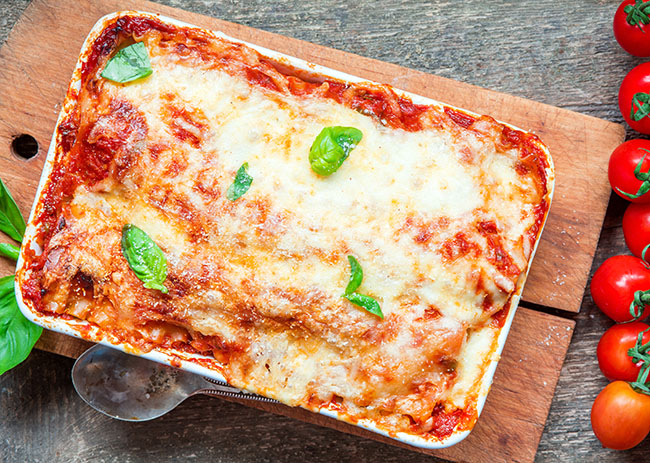
The preparation of the lasagna of uncertain origin between Naples and Bologna obviously varies according to the specific regional tradition in which it is reworked. Lasagna is a type of square-shaped pasta (traditionally three fingers wide) that can be seasoned with meat, fish or vegetables. Some people also use béchamel and to finish the grated cheese, which will give it the au gratin aspect. This dish should not be missing if you want to taste the real Italian cuisine: Horace used to eat with protolasagne (leeks and chickpeas), in Florence in the Middle Ages the art of cooks and lasagnari was born while in the Genoese Republic worked Gualtiero Lasagnarus. It should be enough? 
Risotto
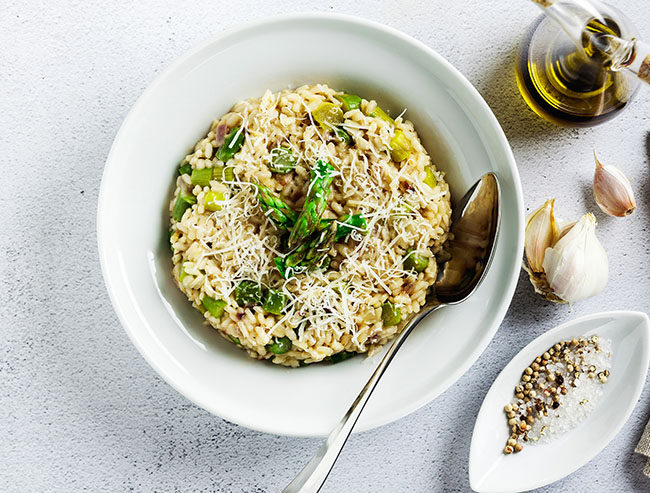
This typical Italian dish is prepared with rice and parmesan, however today there are many risotto recipes with different ingredients. Originating in the north-western part of Italy, thanks to the abundance of rice this dish is already famous practically all over the world. We then think of the literary contribution of Giovanni Pascoli who, in response to his friend Guido Bianchi, put in verse the perfect recipe for risotto.
Arancine
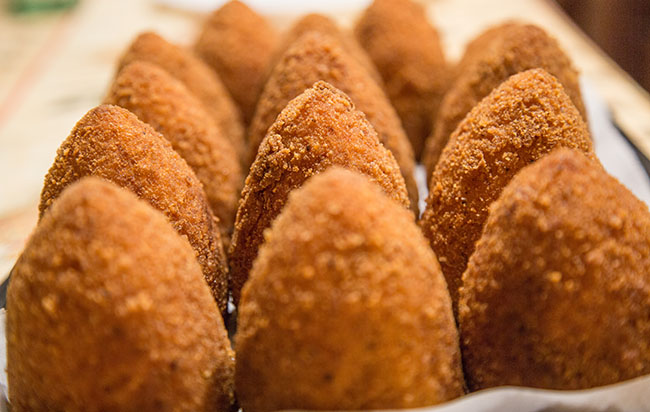
Crispy and golden, the arancine represent balls of rice stuffed and fried after being covered with a sprinkling of crispy breadcrumbs. They are usually filled with ragù, tomato sauce, mozzarella and peas. Inevitable all regional variants, made with different fillings and shapes, depending on the position in which the dish is prepared. Some examples include arancini with ragù (containing tomato sauce, rice and mozzarella), arancini with butter (prepared with creamy bechamel sauce), arancini with mushrooms and arancini with aubergines. The origin of this typical Sicilian street food dish is attributed both to the early Middle Ages, during the Arab invasion, as well as to the bright period of Frederick II of Swabia. However, the first literary source that cites the arancineè I Vicerè , by Federico De Roberto.
Spaghetti bolognese
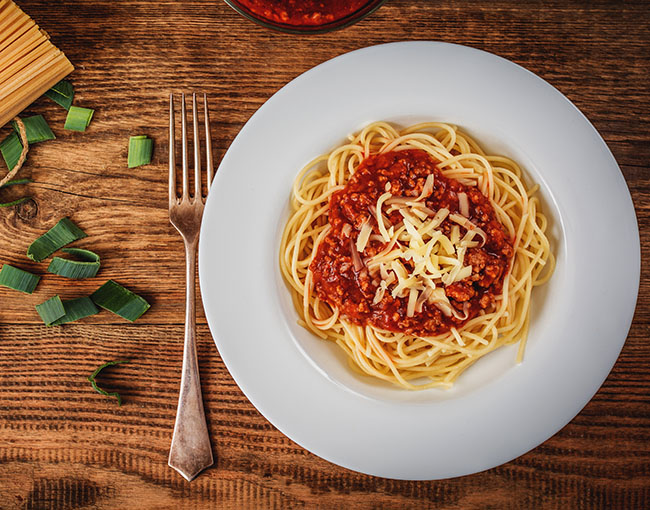
They are simply spaghetti with tomato sauce and minced meat and it is one of the most known icons of Italy in the world. The region where the dish originates is Reggio Emilia and in particular in Bologna (from which the name derives). However, it is not possible to ascribe this dish to an ancient culinary tradition, to which other famous dishes fully belong, such as e.g. tagliatella, lasagna and tortellino, egg pasta classics of the Bolognese tradition, of medieval and Renaissance origin.
Minestrone soup
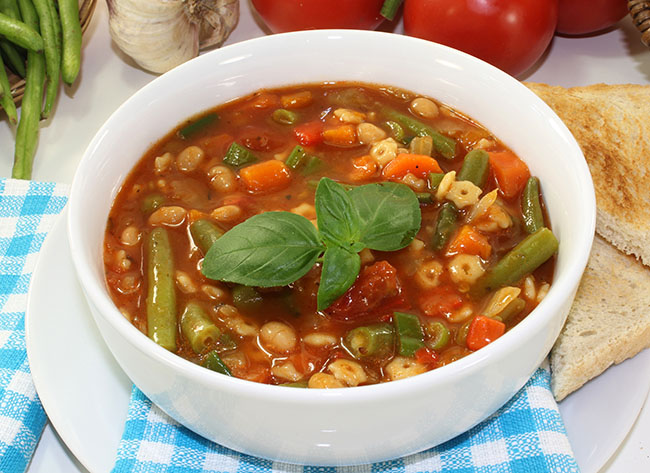
This specialty of Italian cuisine is similar to a vegetable soup, with the only difference that it also contains pasta and in some meat recipes, chicken or ham. The most used ingredients for this soup are carrots, onions, beans, celery and tomatoes, from which you can decide the type of pasta. In the tradition of ancient Rome it was prepared using onions, garlic, carrots, asparagus, lentils and mushrooms, while other ingredients were added in different historical periods, such as potatoes and tomatoes imported into Europe from the Americas during the sixteenth century. Subsequently established as a single dish par excellence in the peasant culture, it is cleared through customs in modernity even in the uses of the wealthiest social classes, becoming one of the symbols of Made in Italy food.
Pizza

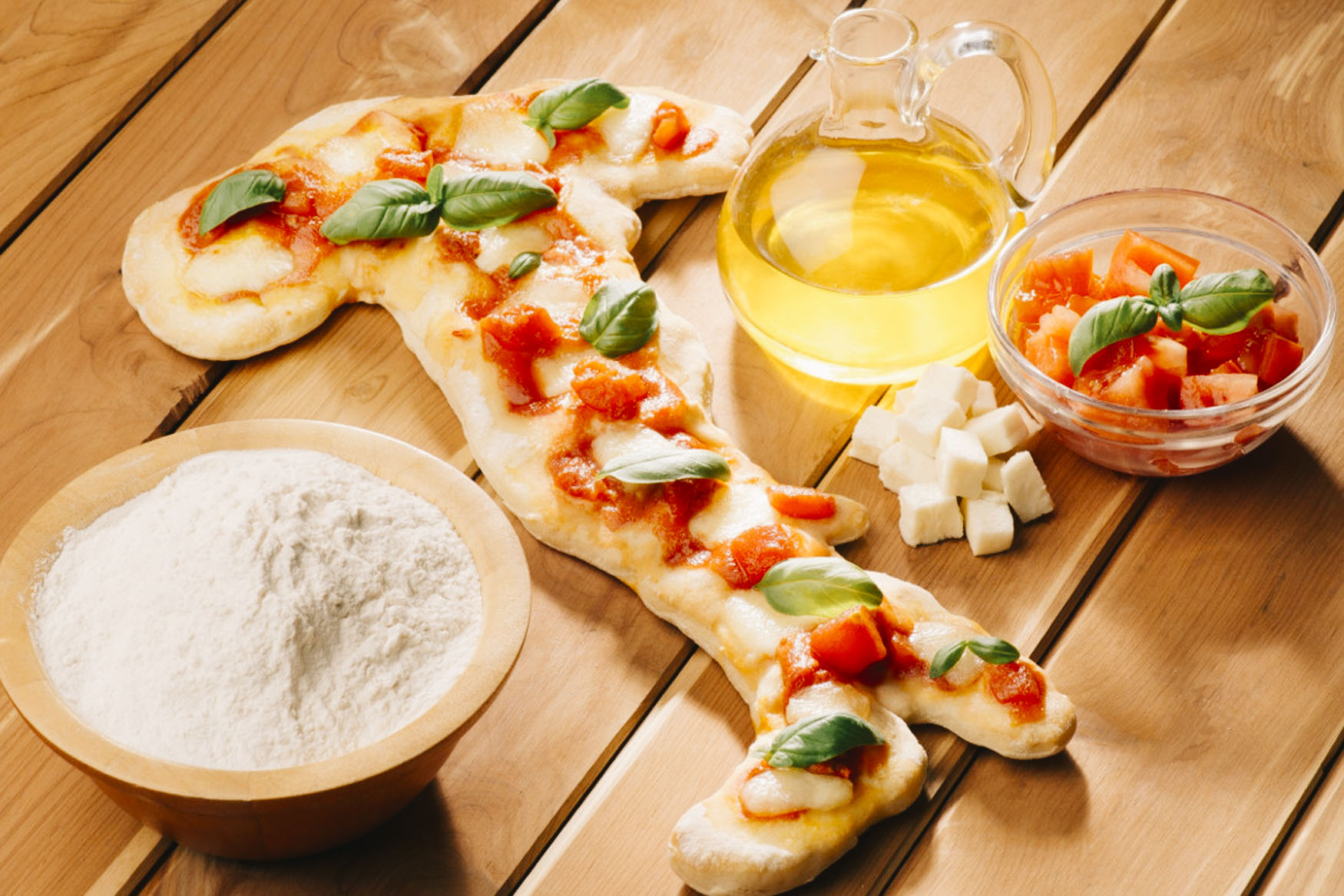
Invented in Naples between the eighteenth and nineteenth centuries, Neapolitan pizza is basically a focaccia topped with tomatoes, mozzarella and extra virgin olive oil. In fact, making a real Neapolitan pizza is an art and requires much more than 3 or 4 simple ingredients. The origin of pizza has a lot to do with bread in Italy, since in ancient Rome it was customary to make circular bread and cut it into different portions. Years later, this pasta would have been seasoned with other ingredients such as tomato sauce and mozzarella. Today pizza supports a variety of ingredients such as: vegetables, meat, fish, seafood and meat. There are three official versions of the Neapolitan Pizza but Margherita is the most famous. Legend has it that this classic dish in the colors of the Italian flag was created by the Neapolitan pizza maker Raffaele Esposito in 1889, when Margherita di Savoia (queen consort of the Kingdom of Italy) visited the city. Today Neapolitan pizza is protected by the Verace Pizza Napoletana Association and is reason enough to visit the third largest city in Italy.
Caprese salad
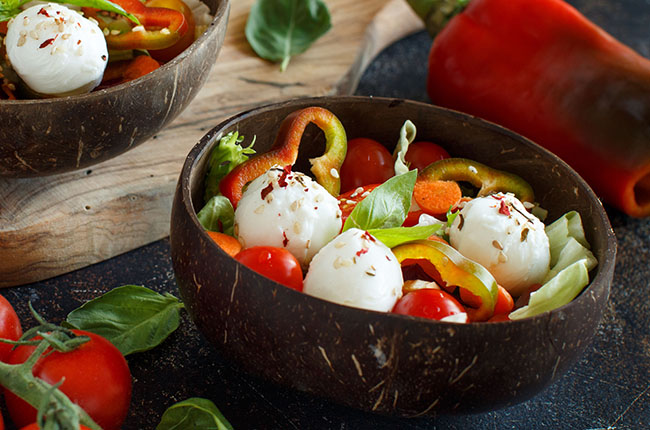
Caprese salad has basic ingredients such as tomato, fresh mozzarella, a few basil leaves and a generous dose of extra virgin olive oil. As simple as it sounds, the combination of these ingredients translates into a salad that stands out for its fresh flavor and the colors that remind us of the Belpaese flag. From the King of Egypt to Filippo Tommaso Marinetti , the history of Caprese is confused over the years between the two wars, but it certainly has a common thread that is certain for the love of the Italic land and its colors.
polenta
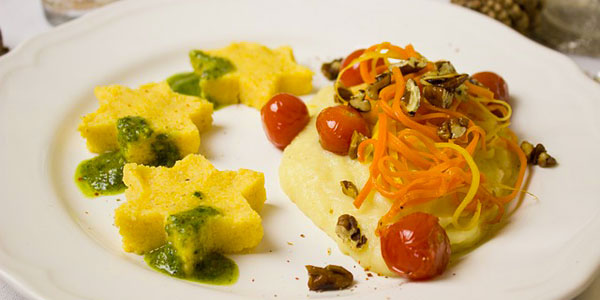
Polenta is certainly one of the oldest dishes in the history of cooked food. Its typical Italian formula is composed exclusively of coarse-grained cornmeal and water. Being a dish originating from mountain areas , polenta is mostly eaten hot, accompanied by various condiments such as sauce, meat or vegetables, but it can also be eaten cold. Just let the dough rest until it cools. When the dough becomes solid it can be cut into slices or cubes and then indulge in the seasonings. It is a simple and inexpensive dish, capable of immediately providing all the energy of carbohydrates. The recipe for corn polenta as we know it today is about 200 years old, but over the millennia the European peoples have cooked infinite variations, using the cereals available such as millet, sorghum, panic, spelled, barley or rye. Maize was imported into Europe only after the discovery of the Americas.
Spaghetti carbonara
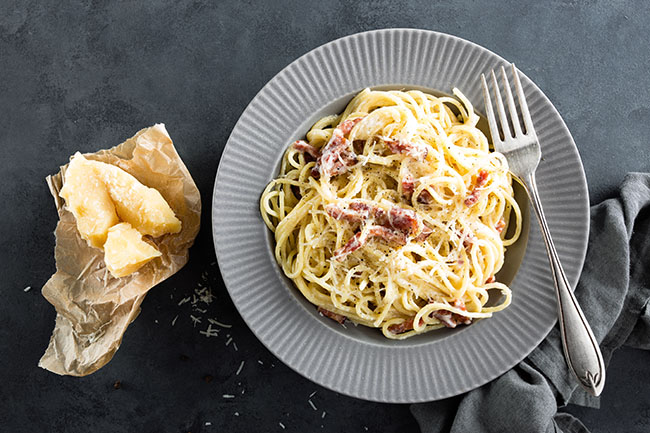
This dish cannot be missing from the list of typical Italian dishes ; however the origin of this classic Roman specialty remains shrouded in mystery. Its name derives from carbonaro (charcoal), so some claim it was a popular meal among Italian coal workers, while others believe it has something to do with the Carbonari, an Italian secret society; in reality none of these theories can be confirmed. If you want to make an easy and typical dish of Italian food, do not hesitate to prepare some delicious spaghetti carbonara. Although its preparation does not require any special cooking technique, the result is a contrast of sweet and savory flavors that explodes in the mouth, with a truly enveloping persistence for the whole palate. The authentic recipe, published for the first time in Italy in the magazine La Cucina Italiana in August 1954, requires spaghetti, egg, bacon, Gruyere and garlic.
Sicilian cannoli
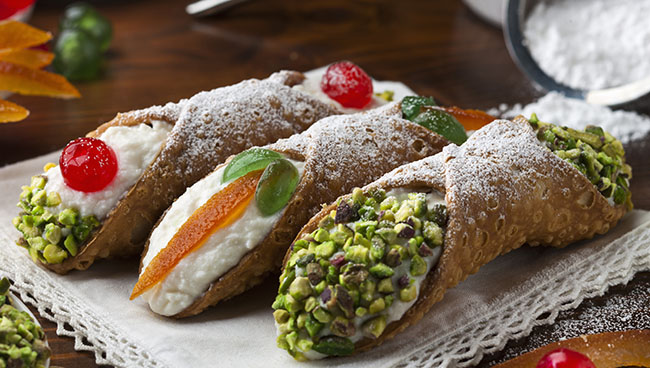
Sicilian cannoli are one of the best known specialties of Italian pastry. Inserted in the list of Traditional Agri-Food Products (PAT) kept by the Ministry of Agricultural and Forestry Policies, cannolo is a tube of hard pasta, similar to puff pastry but more resistant and crunchy, filled with a sweet cream made from sheep's ricotta ; it is so delicious and famous and is prepared in almost all Italian pastry shops, however it is not at all easy to find well-made as it is possible to find in Trinacria. The history of this delicious pastry product is lost in legend. The "Castello delle donne" was the original name of the city of Caltanissetta: now the story about the origins of cannolo is divided into two strands. In fact, there are those who claim that the original recipe was jealously guarded by the nuns of a cloistered convent in the city area, or that it was the women of the harem of the castle of the lord of Kalt El Nissa who gave birth.
Each of these typical Italian dishes has its own history, a legend and an authentic characterization that plows through decades if not centuries of man's journey: but what undoubtedly leaves its mark on the taster's mind is the flavor and experience of the territory with genuine products.




 Italiano
  Espanol
  German
  French